The $500 Treatment in Korea That Costs $3,000 in America
The $500 Treatment in Korea That Costs $3,000 in America
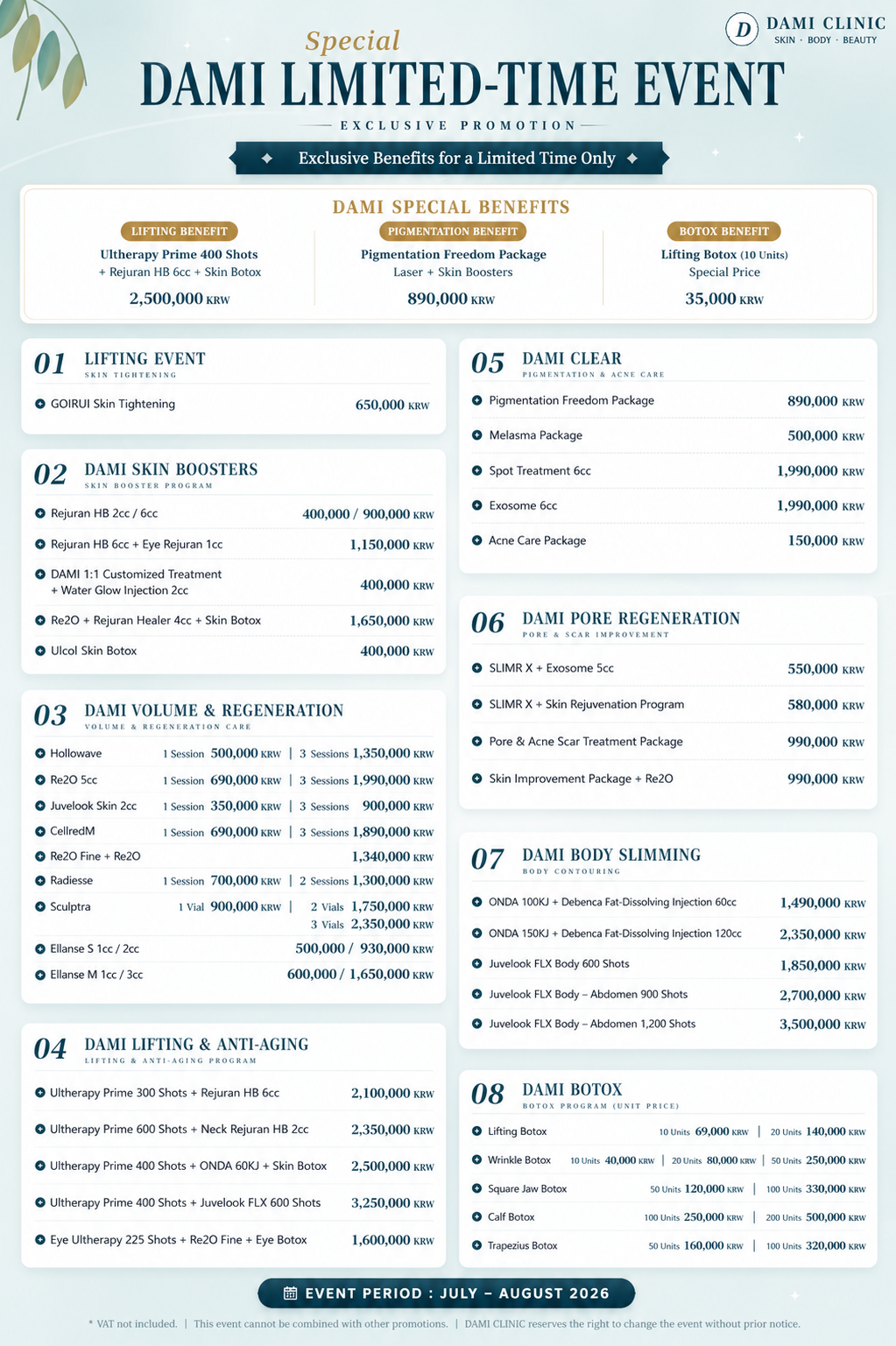
One of the biggest reasons Korea attracts global medical tourists is not just technology—it’s the difference in how aesthetic dermatology is packaged, priced, and delivered as a system. The same type of skin treatment that costs around $3,000 in the United States can often be performed in Korea for roughly $500–$800 depending on clinic level and combination structure.
The gap isn’t only about cheaper pricing—it’s about treatment density, combination design, and clinic efficiency.
What the “$500 Treatment” Usually Includes in Korea
In Korea, a single “treatment session” is often a multi-step skin program, not one isolated procedure.
A typical $500 package may include:
- Laser toning or Pico laser session
- Skin booster (Rejuran, PDRN, or hyaluronic acid type)
- Aqua peel or deep cleansing facial
- LED calming or recovery therapy
- Basic post-treatment care mask
Instead of paying per procedure separately, everything is often bundled into one optimized session.
What the Same Experience Looks Like in the U.S.
In many American clinics, the same combination may be billed separately:
- Laser session: $800–$1,500
- Skin booster or injectable: $800–$1,200
- Facial or peel: $200–$500
- Post-care add-ons: additional cost
Total can easily reach $2,500–$3,500 per visit, depending on location and provider level.
The difference is not just price—it’s how services are segmented and billed.
Why Korea Can Offer Lower Prices
Several structural factors explain the gap:
- High competition between dermatology clinics
- Extremely high patient volume in cities like Seoul
- Fast treatment turnover systems
- Lower administrative and insurance overhead in cosmetic care
- Standardized combination packages for common concerns
Clinics in Korea operate more like high-efficiency aesthetic systems rather than individual procedure billing centers.
The Role of Combination Treatments
Korea’s biggest advantage is not a single device, but how treatments are combined.
Typical Korean approach:
- Step 1: Laser for tone correction
- Step 2: Skin booster for regeneration
- Step 3: RF or tightening for structure
- Step 4: Recovery and barrier repair
This “layered treatment model” is often included in one package price rather than billed separately.
Why Patients Feel the Value Difference
Foreign patients often report that Korea feels more cost-efficient because:
- More treatments are completed in a single visit
- Downtime is minimized across multiple procedures
- Visible improvement can be seen faster
- Packages are structured for clear outcomes, not individual steps
The perceived value comes from time efficiency + treatment density, not just lower prices.
Technology Access vs Pricing Structure
It’s important to note:
- The same devices (Pico laser, Thermage, Ultherapy, RF microneedling) exist in both countries
- The difference is how frequently they are used together
- Korea integrates multiple technologies in one session more often
- The U.S. often separates treatments across visits or billing cycles
This structural difference creates a large cost gap.
Who Benefits Most From Korean Packages
These $500-style Korean treatment programs are most suitable for:
- Mild to moderate acne scars
- Pigmentation and uneven tone
- Dull or dehydrated skin
- First-time medical tourists
- Maintenance anti-aging care
They are not typically designed for severe surgical-level correction cases.
Limitations to Understand
Even though Korea is cost-efficient, there are boundaries:
- Results depend on consistency, not single visits
- Severe scars still require multiple sessions
- Premium clinics can be significantly more expensive
- Outcomes vary by skin type and condition
The value comes from repeatable, structured care systems.
Final thoughts
The reason a $500 treatment in Korea can cost $3,000 in America is not only price differences, but a completely different approach to dermatology. Korea packages multiple advanced procedures into efficient combination treatments, supported by high clinic density and fast turnover systems. This creates a model where patients receive layered skin improvement in a single visit, making Korean dermatology one of the most cost-efficient and technologically integrated aesthetic systems in the world.